







Texas Border Business

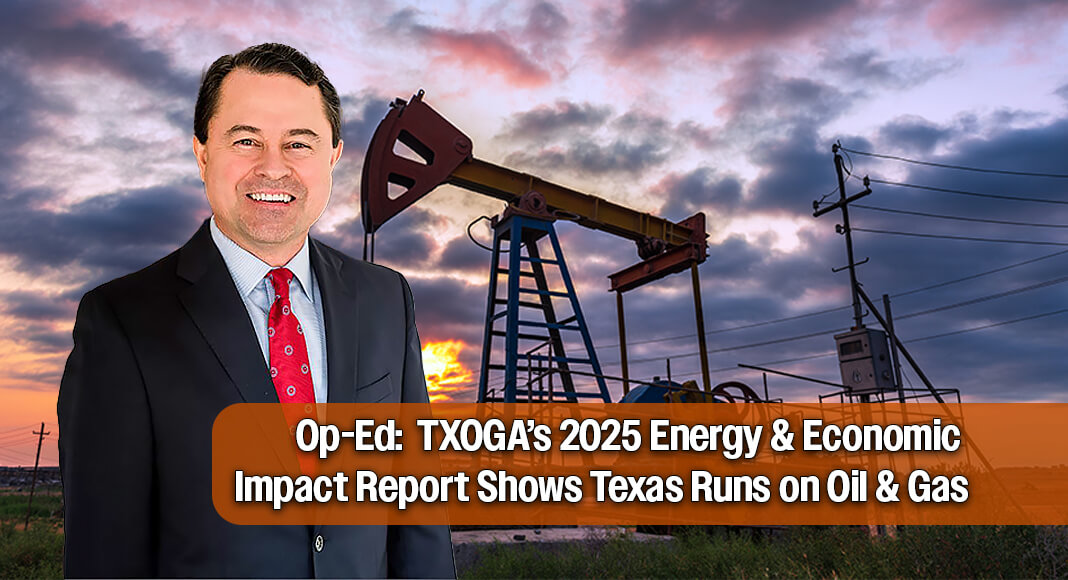
By Todd Staples, President, Texas Oil & Gas Association (TXOGA)
As Texas enters 2026 amid global volatility, persistent inflation pressures, and renewed political debate over how we power our economy, one fact remains clear: progress in Texas is driven by results, not rhetoric. After more than 20 years in public service and over a decade representing Texas’ oil and natural gas industry, I can tell you that talk does not grow jobs, stabilize energy markets, or keep the lights on and houses warm during times of uncertainty. Performance does. Investment does. Innovation does.
And once again, Texas oil and natural gas have proven to be the power behind Texas’ progress.

According to TXOGA’s 2025 Energy & Economic Impact Report, despite lower oil prices and ongoing market headwinds in 2025, the industry remains a stabilizing force for the Texas economy – supporting millions of high-paying jobs, strengthening energy security at home and abroad, and generating historic revenues for schools, roads, first responders, and essential public services across the state.
In fiscal year 2025 (FY25), the Texas oil and natural gas industry paid $27 billion in state and local taxes and state royalties – the second highest total in Texas history. The industry is the single largest generator of tax-like revenues per employee, paying 7.5 times more per employee than the rest of the private sector. Twenty-several billion dollars exceeds the entire tax revenues of 34 states and translates to nearly $74 million every day to fund what Texans rely on, whether you live in the oil patch or not.
Since 2007 when TXOGA first started compiling these data, the Texas oil and natural gas industry has paid more than a quarter of a trillion dollars in state and local taxes and state royalties. This figure does not include the hundreds of billions of dollars paid annually in payroll for some of the state’s highest paying jobs, the royalties paid directly to Texas families, or the taxes paid on office buildings and personal property–nor does it capture the enormous economic ripple effects across the broader economy.
Nearly 500,000 Texans have a direct job in oil and natural gas, earning an average of $133,000 dollars per year – 68 percent more than the average paid by the rest of Texas’ private sector. Conservatively, these jobs generate approximately two more jobs, with 1.4 million total jobs supported across the Texas economy.

In FY25, Texas school districts received $2.6 billion in property taxes from mineral properties producing oil and natural gas, pipelines, and natural gas utilities, while counties received an additional $1 billion.
Oil and natural gas revenues also remain the primary source of new capital for the Permanent School Fund and Permanent University Fund, which received $1.4 billion and $1.72 billion, respectively, in FY25. Together, these education endowments now exceed $100 billion. The Permanent School Fund alone is larger than Harvard’s endowment and is the largest educational endowment in the nation.
That same year, Texas’ Rainy Day Fund and State Highway Fund each received $2.7 billion dollars from oil and natural gas production taxes.
Despite market challenges, the oil and natural gas industry shattered another string of performance records in FY25 including record production of crude oil, natural gas and natural gas liquids (NGLs). This production “triplet” – combined with increased direct use of NGLs in petrochemicals, refining inputs, and record-low crude oil imports – demonstrates how Texas continues to adapt by increasingly utilizing resources produced here at home. Continued expansion of pipeline and LNG export infrastructure further strengthened U.S. energy security and supported global energy stability.
This performance is no accident. It reflects Texas’ long-standing commitment to reliability over rhetoric and pragmatism over politics. Policymakers recognize that science-based rules and free-market principles deliver affordable energy and broad-based economic opportunity. Sustaining this progress requires policies that build on success and encourage investment in innovation and infrastructure of all kinds.
At a time when energy debates are often driven by competing narratives, the industry’s continued strong performance and unmatched economic impact underscore a simple truth: Texas runs on oil and natural gas – made possible by hundreds of thousands of skilled men and women who rise before the sun to keep our economy moving and our communities secure. By building on what works, we can ensure that this progress continues for every Texan, well into the future.
Information source: TXOGA