







Texas Border Business

Texas Border Business
The relocation of manufacturing operations from Mexico and other countries back to the United States has become a defining trend in global industry. While it is often confused with “nearshoring,” experts clarify that the current wave of factory moves represents a different phenomenon known as reshoring or onshoring.
Nearshoring refers to transferring production to a nearby country to reduce logistics costs, minimize supply chain risks, and shorten delivery times. A typical example is a U.S. company that previously manufactured in China and later moved operations to Mexico to be closer to the North American market. This strategy proved especially beneficial to Mexico after the COVID-19 pandemic and under the United States-Mexico-Canada Agreement (USMCA), as many companies sought to strengthen regional supply chains.

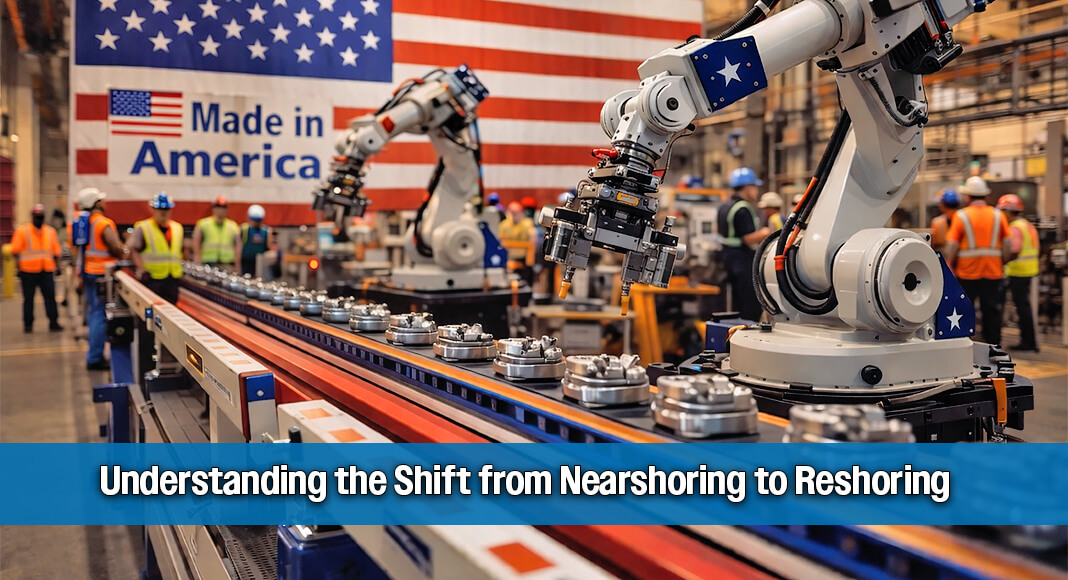
Reshoring—or onshoring—describes a different type of move. It occurs when a company brings manufacturing back to its home country. In the U.S. context, this means firms that once operated in Mexico, China, or other parts of Asia are now investing in new facilities in Texas, Tennessee, Georgia, and other states. The primary motivations include trade tensions, tariff policies, advances in automation, and government incentives that make domestic production more competitive.
Unlike nearshoring, which keeps manufacturing close but still abroad, reshoring signals a return of production to the United States itself. Reports from organizations such as the Reshoring Initiative note that American companies have announced record levels of domestic manufacturing investment over the past three years, particularly in automotive, electronics, and clean-energy sectors.
A third concept—friendshoring—has also gained traction. This approach involves shifting production to politically or economically aligned countries to reduce dependence on regions with geopolitical instability. For example, a U.S. company closing a factory in China might move operations to Mexico, Canada, or Vietnam, where trade relations are more predictable.
In simple terms:

• Nearshoring means moving production to a nearby country, such as from China to Mexico.
• Reshoring or Onshoring means bringing production back home, such as from Mexico to the United States.
• Friendshoring means relocating production to allied nations, such as from China to Vietnam or Mexico.
The current movement of factories and businesses from Mexico and other regions to the U.S., therefore, falls under reshoring, a process driven by the desire to strengthen domestic manufacturing resilience and reduce global exposure. Analysts describe it as part of an industrial rebalancing—one that redefines where goods are designed, built, and delivered in an increasingly complex global economy.