




Texas Border Business

By Roberto Hugo González
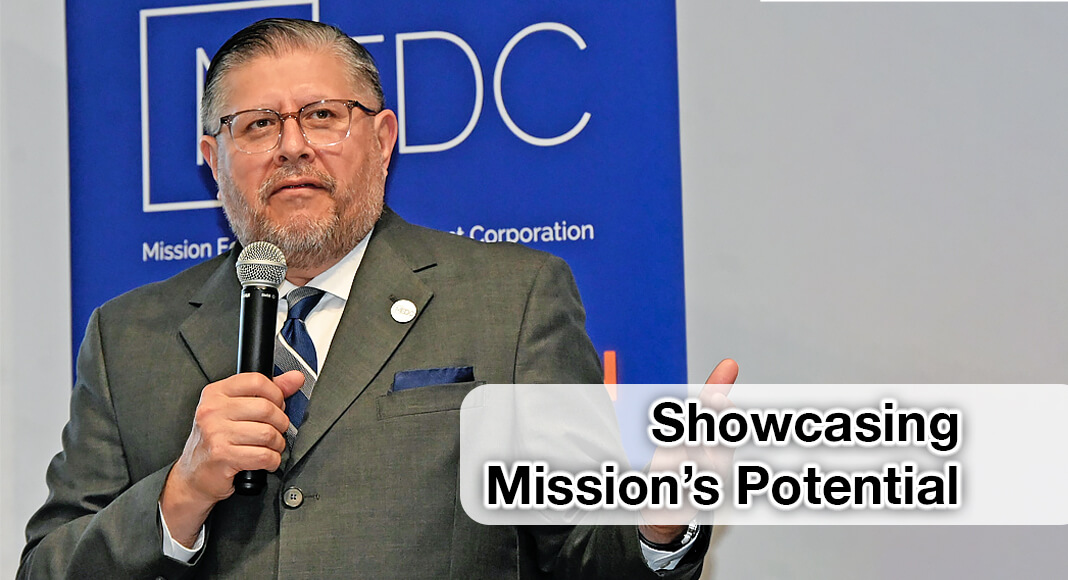
The Mission Economic Development Corporation hosted its Commercial and Investment Tour on Wednesday, May 28th, at the Center for Education and Economic Development (CEED), offering stakeholders a firsthand look at the city’s growth and potential. Led by Mission EDC CEO Teclo Garcia, the event featured a panel of developers and investors. It served as an update and a call to action for continued regional engagement and innovation.
Garcia opened the event with a candid and data-driven presentation, emphasizing Mission’s strategic advantages and economic trajectory. “Thank you, everyone. I’m Teclo Garcia,” he began, offering gratitude to attendees.

Garcia laid the foundation for the day’s discussion by presenting key statistics, highlighting that Mission’s population had grown to 88,000, a 3.2% increase since 2020. “We’ve shown growth,” he noted, “but sometimes we think they’re just people in numbers. We need to grow our infrastructure, we need to grow our institutions, and we need to grow our markets as well.”
The event featured panelists from Killam Development, Arch Renati/Tekna Impact, Domain Development, and Union Design Developers, each offering insight into why they chose Mission as the place to launch and grow their projects. While their contributions were significant, Garcia’s voice framed the conversation with a clear-eyed analysis of Mission’s socioeconomic position.
Among the most compelling points Garcia shared was Mission’s household income, now at $60,854—the highest among larger cities in the Rio Grande Valley. “It’s the highest in the market,” he stated, “but still below the state level. We need to work on things to improve that.” He highlighted the city’s low poverty rate of 17%, the lowest among comparable Valley cities, signaling progress despite challenges.
Garcia pointed to housing and labor statistics as further evidence of economic vitality: Mission’s median home price is $267,000, and apartment rents average $931. The city’s labor force now includes 38,000 employed residents—the highest number in Mission’s history—with an unemployment rate of 4.9%.
Bridge traffic data added another layer to the city’s regional importance. “We’ve got double the amount of passenger vehicles than Pharr has,” Garcia said, referencing 3.2 million annual bridge crossings, and hinting at Mission’s growing role as a conduit for cross-border mobility. He noted that with increased travel from cities like Monterrey and Saltillo, Mission is strategically positioned for both consumer and commercial growth.
Garcia also addressed the real-world implications of infrastructure readiness, especially drainage. “It’s all about drainage, right? We have to have drainage,” he said, reinforcing the importance of foundational planning in development. Referencing a recent storm event, City Manager Mike Perez added, “We’re the only city in the Valley that did not have one home or one business that got water.”
The event served as a networking opportunity and a moment of reflection and vision-setting for what lies ahead in Mission. As Garcia summed up, “There’s stuff happening here. People need to realize what’s happening in Mission.” Through his words, and the contributions of the panelists and attendees, the message was clear: for many entrepreneurs and developers, their mission started—and continues to grow—right here.
See related stories: