







Texas Border Business

Texas Border Business
The Interoceanic Corridor of the Isthmus of Tehuantepec is a major infrastructure project led by the Mexican government to connect the Pacific Ocean at Salina Cruz with the Gulf of Mexico at Coatzacoalcos through a rail and logistics network spanning approximately 303 kilometers. The initiative is designed to facilitate cargo movement across southern Mexico as an alternative to maritime routes such as the Panama Canal.

The project includes modernized railway lines, port expansions, industrial parks, and customs and logistics infrastructure. It was launched in 2019 under the administration of former President Andrés Manuel López Obrador to promote economic development in southern Mexico and strengthen the country’s role in global trade.
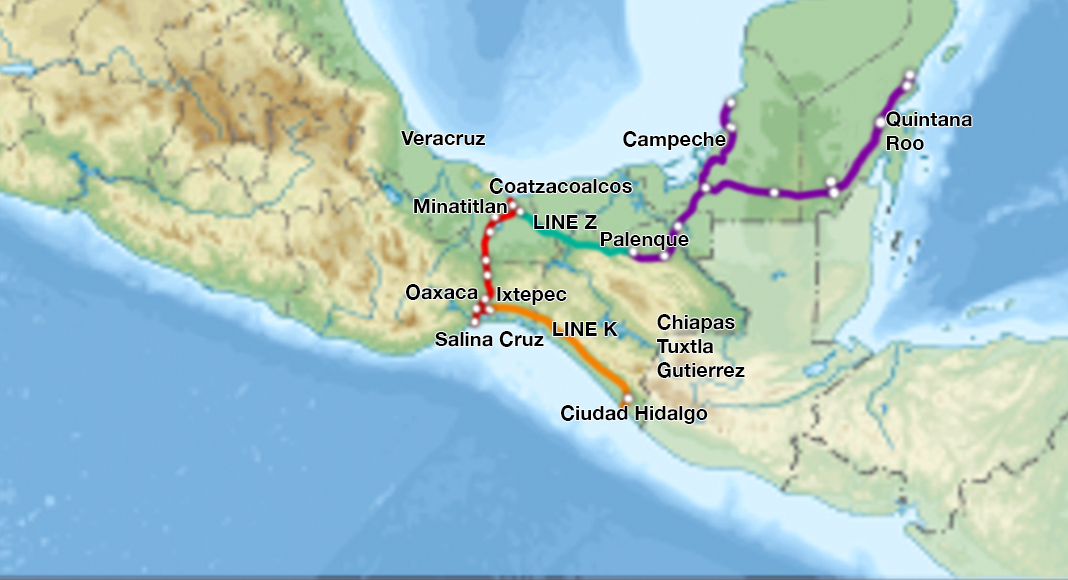
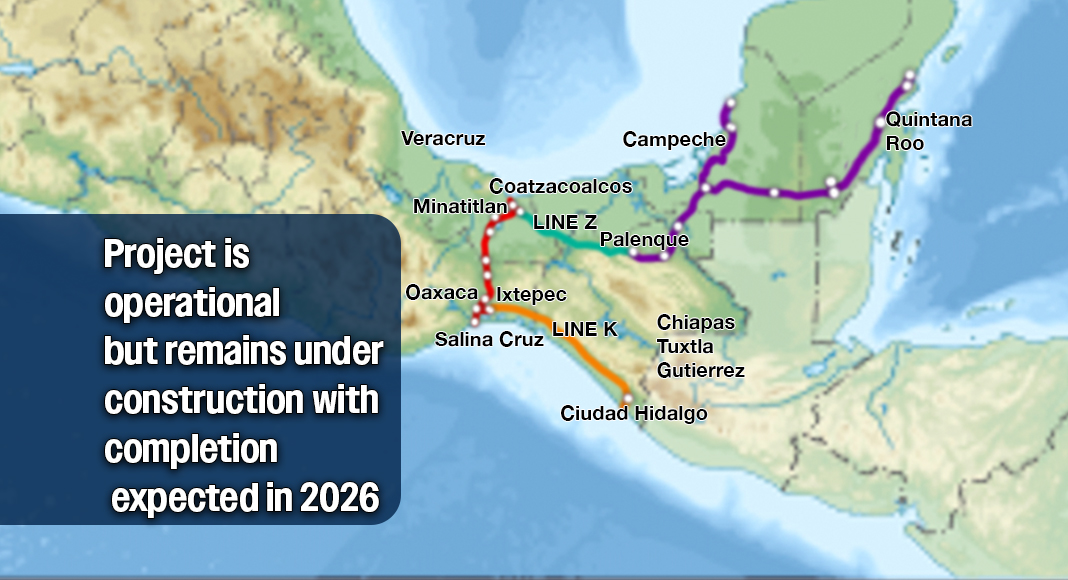
According to publicly available project information, the corridor is already partially operational. Freight service along the main rail line, known as Line Z, began in August 2023, followed by passenger service in September 2023. Cargo shipments are currently moving across the isthmus, and additional rail segments have been inaugurated or tested between 2024 and 2025.
Despite these advances, the project is not yet complete. Key components remain under construction, including sections of the rail network such as Line K, which is reported to be approximately 87 percent complete and expected to be finished by mid-2026. Port upgrades, particularly at Salina Cruz, are ongoing, and the development of industrial parks and logistics hubs is ongoing.
The corridor is intended to function as a multimodal system integrating rail, ports, and industrial activity. Full operational capacity depends on the completion of these interconnected components.
Mexican officials have emphasized the project’s strategic importance, noting its potential to serve as a faster alternative to traditional maritime routes and to strengthen trade flows, including those tied to nearshoring trends in North America. The corridor is also positioned as a tool to drive economic growth in a region that has historically lagged behind other parts of the country.
At the same time, the project remains in a consolidation phase, as analysts describe it. Ongoing construction, operational adjustments, and infrastructure integration continue to shape its development. Reports of incidents, including a 2025 train derailment, have also raised concerns about safety and oversight as the system expands.
Current timelines from government and industry sources indicate that full completion of the Interoceanic Corridor is expected around mid-2026. Until then, it continues to operate at a reduced capacity while construction and development proceed.