





Texas Border Business

Texas Border Business
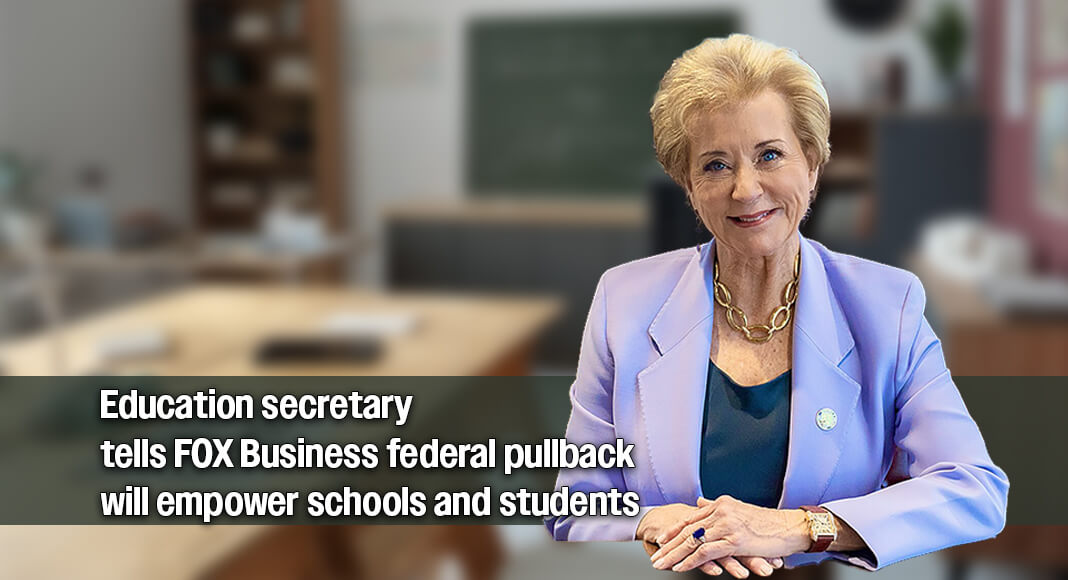
January 9, 2026 – U.S. Secretary of Education Linda McMahon said the Department of Education is intentionally reducing its size as part of an effort to shift authority over education back to states and local communities. McMahon made the comments during an interview earlier today with Maria Bartiromo on FOX Business.
Data from the Office of Personnel Management cited during the interview shows the department has cut approximately 39 percent of its workforce, eliminating about 2,000 positions between January and November 2025. McMahon said the reductions were planned. Asked whether the cuts were deliberate, she said they were “in keeping with returning education to the states.”

McMahon said President Donald Trump believes education decisions should be made as close to students as possible, rather than by federal officials in Washington. “The best education is that closest to the student, not from bureaucracy in Washington, D.C.,” she said. She added that the department is working to reduce regulatory costs so that funding approved by Congress can reach states and school districts more directly.
Despite the staff reductions, McMahon said the department continues to support targeted initiatives. She pointed to nearly $170 million in new grant awards aimed at encouraging what she described as the responsible use of artificial intelligence in schools, expanding short-term workforce training programs, promoting accreditation reform, and supporting civil discourse on college campuses.
“AI is here to stay. We need to embrace it,” McMahon said, while emphasizing the need for safeguards. “It needs to have guardrails around it, for sure.” She said she has seen artificial intelligence used in elementary and middle schools as a form of individualized tutoring, allowing students who need extra help to receive it while enabling others to move ahead at a faster pace.
McMahon acknowledged concerns that artificial intelligence could replace some jobs, but said technological change has historically created new opportunities. “Just as we’ve always seen when technology develops and some jobs are displaced, others are created,” she said. “AI is going to be a force for good as long as it has the proper guardrails around it.”

She also argued for a broader cultural shift in how education and career paths are viewed, urging greater recognition of trade schools and vocational training. “We need HVACs, we need electricians, we need plumbers, we need carpenters,” McMahon said, noting that millions of skilled trade positions remain unfilled. She said partnerships between high schools and community colleges are allowing students to graduate with both diplomas and trade certifications. “It’s really the wave of the future,” she said.
The secretary also addressed civics education and patriotism, saying schools have moved away from teaching what she described as a shared sense of national identity. “We don’t teach civics,” she said. “We don’t teach love of country. We don’t say the Pledge of Allegiance.” McMahon said the department is promoting civics education through efforts such as the “History Rocks” tour as the nation approaches its 250th anniversary.
Literacy, she said, remains her top priority. Citing national assessment data, McMahon said only about 30 percent of students are reading at grade-level proficiency. “My number one priority is literacy,” she said. She urged states to adopt the “science of reading,” an approach that emphasizes phonics and structured reading instruction. “If you cannot read proficiently by the end of third grade, you’re going to be left behind,” she said.
McMahon also highlighted waivers offered to states to reduce federal regulatory costs. Iowa, she said, was the first state to accept the waiver, saving about $8 million that can be redirected into classrooms. She said additional states are expected to follow.
Throughout the interview, McMahon emphasized that while the federal role in education is shrinking, the department’s stated goal remains improving student outcomes. “We’re going to continue doing what we’re doing,” she said, “as we take education back to the states.”