








Texas Border Business

By Roberto Hugo González / Texas Border Business
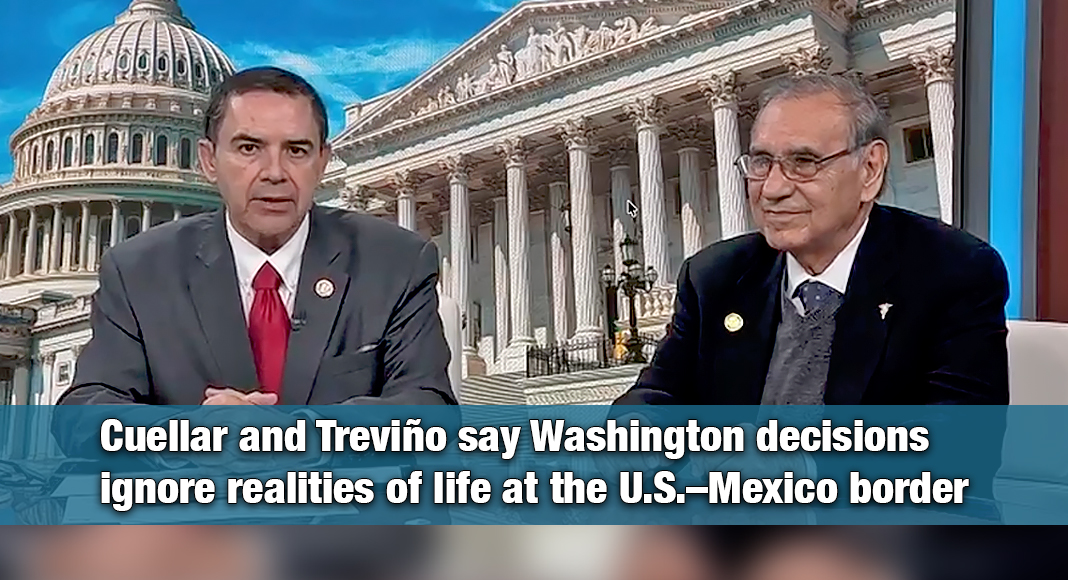
A virtual press conference held on January 14, 2026, brought together a U.S. congressman and the mayor of Laredo, Texas, to discuss how federal policies on border security, immigration, trade, healthcare, and funding are affecting border communities. The event was held online and featured remarks in both English and Spanish.
The speakers were Congressman Henry Cuellar, who represents a South Texas border district, and Laredo Mayor Dr. Victor D. Treviño. Both emphasized that border security, commerce, and quality of life are closely connected and must be addressed together.

“One of the most important things that we have to focus on is that commerce, border security, and quality of life are all intertwined,” Treviño said. “We live and work at the border, so we have firsthand experience of what the challenges are, and we understand that there has to be border security in order for commerce to be successful.”
Treviño noted that Laredo is the largest inland port of entry in the Western Hemisphere, giving the city a national responsibility to keep trade moving while maintaining security. He said that focusing solely on security, without considering economic and community impacts, creates serious problems for residents and businesses.
Cuellar said border residents support strong border security but want it to be reasonable and effective. He argued that policy decisions in Washington often fail to reflect how the border actually functions.
“They really don’t understand the border the way we operate the border, so we’ve got to find balance there at that place,” Cuellar said.

Cuellar explained that border crossings have declined due to policy enforcement, not physical barriers. “What you’ve got to have is repercussions at the border,” he said. “Whoever is supposed to come in comes in. Whoever is not supposed to come in should be returned.”
Both leaders raised concerns about stepped-up Immigration and Customs Enforcement actions at job sites. Cuellar said enforcement efforts have expanded beyond criminals and are now targeting long-time workers with no criminal records, particularly in the construction industry.
“The problem is now they’re doing the ICE raids where they’re not only going after criminals,” Cuellar said. “They’re going after good people that have been around for years, are working, don’t have criminal records.”
He said these actions are creating fear and disrupting the local economy, delaying construction projects, and affecting businesses. Cuellar said he has been in contact with builders across South Texas and has spoken directly with ICE leadership.
“If they want to get rid of criminals, that’s one thing,” he said. “But when they start going after work sites, that has an impact on our economy.”
Both speakers said there is a need for legal work pathways for undocumented workers in essential industries. Cuellar said he supports improving work visa programs so people can work legally without fear.
Tariffs were another major topic. Treviño said tariffs act as a tax on consumers and raise prices on everyday goods.
“These tariffs represent a tax,” Treviño said. “When goods are taxed, the price goes up, and that price is paid by the consumer.”
He said tariffs have created uncertainty in international trade, making businesses hesitant to invest and affecting jobs. Cuellar added that trade and tariffs are the responsibility of Congress, not the executive branch.
“We saw what happened in the 1930s when they added tariffs,” Cuellar said. “The U.S. didn’t do very well.”
Cuellar also criticized the administration for cutting federally funded programs that had already been approved by Congress, including funding for DWI courts and mental health programs.
“Appropriations are done by the U.S. Congress,” he said. “They’re allowing the administration to cut certain things that they cannot do legally.”
Healthcare was another major concern. Treviño warned that failing to extend the Affordable Care Act would leave thousands of Laredo residents without insurance.
“The more people that are underinsured or non-insured wind up in the emergency rooms,” Treviño said. “In the long run, everybody loses.”
Cuellar said lawmakers are working to extend the Affordable Care Act, noting clinics are worried about the impact if coverage expires.
Throughout the conference, both leaders emphasized the need for balanced policies that reflect conditions on the ground.
“We want security, but at the same time we want commerce,” Cuellar said. “And we want people to be able to work and contribute to the economy.”