







Texas Border Business

By Roberto Hugo González
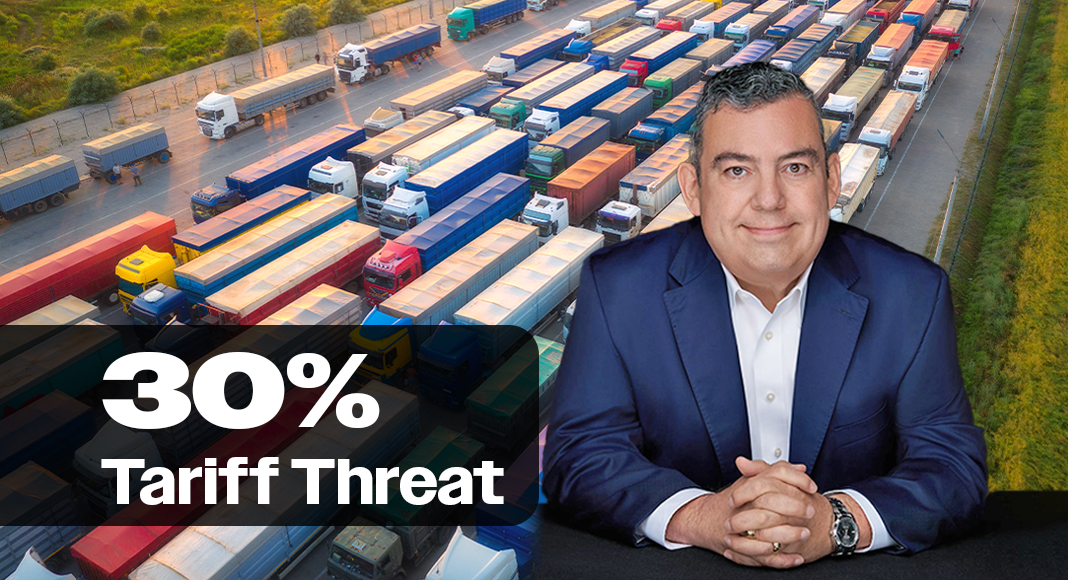
As the August 1 deadline for new U.S. tariffs on Mexican imports approaches, uncertainty looms over cross-border trade. With potential increases up to 30% and unclear guidance on their scope and application, businesses on both sides of the border are bracing for impact. In an exclusive interview with Texas Border Business publisher Roberto Hugo González, customs expert Jorge A. Torres—President of Interlink Trade Services—offers insight into what these tariffs could mean for Mexican exporters, Texas importers, and the broader U.S.-Mexico trade landscape.
1. Mr. Torres, how would you summarize the impact of the 30% tariffs set to take effect on August 1st on Mexican exports to the United States?

Currently, Mexico has an IEEPA Fentanyl/Immigration Tariff of 25% for non-USMCA qualifying products. It is still not known (as of 7/29) whether the 30% tariff to take effect on August 1st is in addition to the existing tariff or an increase of 5% to the current 25% tariff. Also, it is still not known whether it will apply to USMCA qualifying products. Therefore, the impact can be minimal or substantial depending on the mentioned factors.
2. Which sectors or industries in Mexico do you anticipate will be most affected by these tariffs?
Depending on the above factors, the tariffs can substantially impact all industry sectors and goods, especially non-USMCA qualifying goods and the automotive and metallurgical industries.
3. From your experience as a customs broker, what logistical or customs-related challenges do you foresee for exporters after the tariffs are implemented?

As we are currently seeing from the tariffs implemented since February, the additional information requirements and the additional tariff provisions to be declared in the entry declarations have created errors, delays and even over/under tariff payments due to the complexity of interpreting all these tariff provisions. Having additional tariff provisions like this one will increase the exposure to all of the mentioned points.
4. How might these tariffs influence cross-border supply chains, particularly for Texas-based companies that depend on Mexican goods?
We can expect less border crossings of goods from Mexico and price increases to the end consumer.
5. Texas is Mexico’s largest trading partner in the U.S. What kind of short-term economic impact do you think Texas businesses will experience?
We can expect some economic disruptions in employment (logistics, service industries), real state (warehouse building construction and leasing) and sales tax receipts in our region.
6. Are small and medium-sized exporters in Mexico more vulnerable to this tariff policy than larger multinationals? Why or why not?
In my opinion, yes, since they might not have the financial resources and management experience to deal with these types of disruptions compared to multinationals.
7. Have your clients begun to reroute or delay shipments in anticipation of the August 1st deadline? What trends are you seeing at the border?
Not yet, but we have met with several customers to evaluate options to mitigate the impact of these tariffs, including rerouting and delaying shipments.
8. Is there any room, from your perspective, for exemptions or product reclassifications that could help mitigate the impact on certain exporters?
Yes, mainly USMCA qualification of products and some “tariff engineering”.
9. What advice would you give to Mexican exporters and Texas importers trying to navigate this new trade reality post-August 1st?
It is hard to provide certainty of advice under the current scenario we are living in. All we can do is stay informed and vigilant and be ready to implement plans of action that can at least mitigate some of the financial impact of these tariffs. These involve being proactive internally and having constant corporate strategy meetings, as well as receiving advice from professionals.
10. Given recent dialogue between President Sheinbaum and the U.S. Congress, do you see any realistic diplomatic or economic pathway to de-escalate this tariff conflict in the coming months?
President Sheinbaum and her team have taken a diplomatic approach without aggression in dealing with President Trump. Therefore, Mexico is in a better position than other countries (Canada) to come out with less damage. USMCA will be reviewed (renegotiated) in 2026 and probably even earlier. The U.S. needs Mexico, and Mexico needs the U.S. I believe that in the end, both countries will meet in the middle, and things might stabilize and be more certain so that we can move forward with new investments and economic growth.
Jorge A. Torres is the President and Founder of Interlink Trade Services, a McAllen, Texas–based firm specializing in customs brokerage, trade compliance, and cross-border logistics. A U.S.-licensed customs Broker since 1995 with over 30 years of experience, he is a recognized expert on U.S.-Mexico trade, nearshoring, and regulatory matters. He holds a degree in Accounting from Texas A&M and has previously taught customs regulations at South Texas College. Most recently, Torres joined the Customs Administration Certification Program at Tecnológico de Monterrey, where he is teaching the module “Customs Operations in the U.S.” as part of a 152-hour, fully online program designed for professionals in law, foreign trade, accounting, and related fields.