








Texas Border Business

By Roberto Hugo González / Texas Border Business
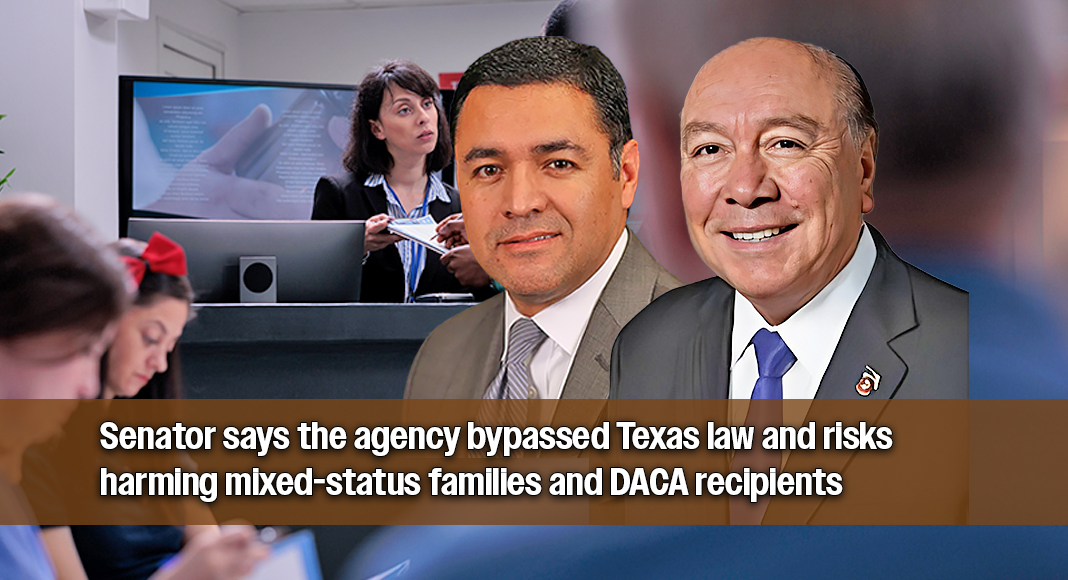
Senator Juan “Chuy” Hinojosa is publicly questioning the Texas Department of Motor Vehicles after the agency issued an immediate bulletin on or about November 18 that changed identification requirements for vehicle registration. In the interview, he argued that DMV Executive Director Daniel Avitia acted outside the agency’s authority by making statewide changes without following the legally required process. Hinojosa said the bulletin “was not well vetted and will create chaos and confusion,” stressing that the DMV must comply with the Texas Administrative Procedure Act, which requires notice, transparency, and public participation. “Of course,” he said when asked whether the DMV should have provided more notice. “That’s why we have the rulemaking process.”
The senator explained that state law already defines how identification rules can be changed. Citing Transportation Code Section 502.040, he repeated the statutory requirement that “the application must be accompanied by personal identification as determined by department rule.” He noted that the Legislature had not changed this statute and that the DMV “has not followed the proper rule-making process.” He further warned that bypassing the process creates real risks for Texas. “This directive was not well vetted and will create chaos and confusion, leading to inconsistent implementation across the state,” he said, pointing to thousands of county tax assessor-collectors and auto dealers who rely on clear and lawful instructions.

Hinojosa emphasized that failing to follow the rule-making process threatens both safety and administrative integrity. According to him, the bulletin’s effects could be severe: “unregistered vehicles on the road, ghost titles being issued, and the possibility that it could lead to law enforcement challenges in being able to trace and identify offenders based on fake registration — all public safety concerns.” He added that sudden changes without notice “could also have a negative economic impact,” as Texans may reconsider vehicle purchases if they fear they cannot complete registration.
The senator said the DMV’s abrupt clarification on November 25 only highlighted the problem. The agency, he noted, was already having to revise or explain its own directive within seven days, which he described as evidence of insufficient vetting. He explained that these changes affect mixed-status families along the border, DACA recipients with federal work authorization, and individuals who are legally in the United States. “DACA recipients are in the country legally and are protected. They should be allowed to buy and register a vehicle,” he said. Hinojosa also stated that “anyone in the U.S. with permission to be in the country should be able to purchase and register a vehicle.”
The senator made clear that sudden restrictions may unintentionally block lawful residents from renewing their registrations. “Families who are legally present in the U.S. will face hardships if they cannot renew their registration,” he said, emphasizing that public transportation in South Texas “is not as reliable as it is in larger cities.” He stressed that people in rural border communities depend on cars for everyday needs such as work, medical appointments, and school. “People will struggle to go to the doctor, take their children to school, go to work, or participate in normal daily life.”
As for the DMV’s authority to reconsider its identification list, Hinojosa said that reviewing rules is permitted, but only if done properly. “There is nothing improper about reviewing the rules to see if any changes are needed,” he said. “This can be done by filing a bill during the legislative session or by the agency, as already authorized by law, as long as it goes through the proper process.” That process, he stressed, requires protections for lawful residents, clear guidelines, and safeguards against ghost titles and fake registrations. “There must be clear guidelines so that the Department of Motor Vehicles knows who owns the vehicle, preventing ghost titles and ensuring public safety.”

Through his interviews and letters, Hinojosa signals that the issue is not only about immigration but about governance: the rule-making procedures that anchor Texas agencies, the need for public safety, and the risk of undermining people who are lawfully present in the state. He said he has already asked for “the legal basis” behind the bulletin and urged the DMV to pause implementation until it complies with the law. The debate continues, but Hinojosa’s message is clear: agencies must follow Texas law before enforcing changes that affect millions of people.
Follow the link below for more information from The Texas Department of Motor Vehicles:
https://content.govdelivery.com/accounts/TXDMV/bulletins/3fc3088?utm_source=chatgpt.com
See related stories: