








Texas Border Business

Texas Border Business
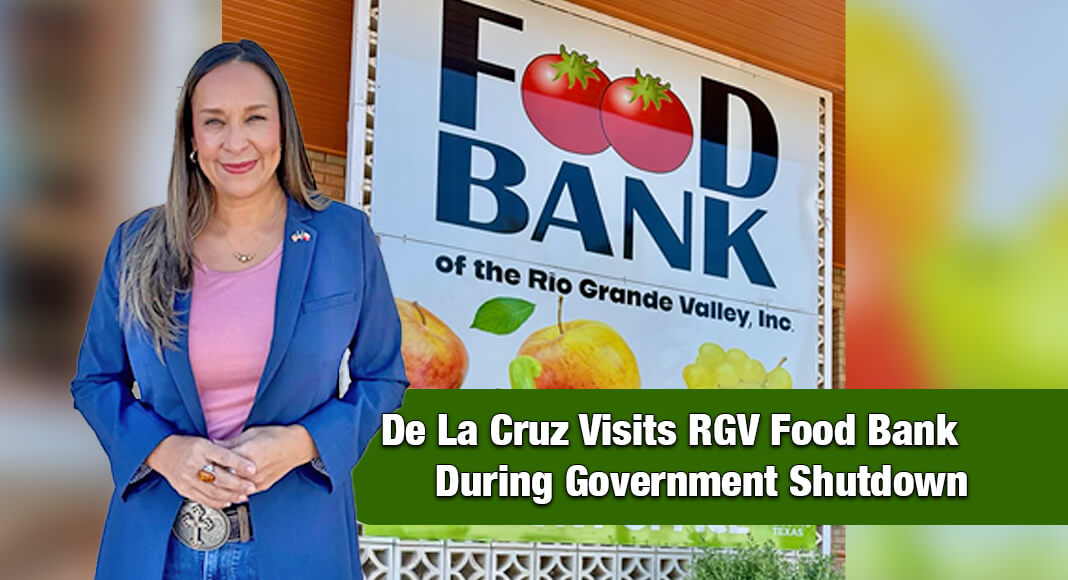
WASHINGTON, DC – Congresswoman Monica De La Cruz (TX-15) visited the Food Bank of the Rio Grande Valley in Pharr, Texas, on Friday to assess how the ongoing federal government shutdown is affecting local families and food-assistance programs.
During the visit, De La Cruz toured the facility and met with staff to discuss the growing challenges posed by the suspension of federal funding for nutrition programs such as the Supplemental Nutrition Assistance Program (SNAP).

“Nearly 20 percent of South Texas households rely on SNAP benefits,” De La Cruz said. “I voted over a month ago to keep the government open and fund these critical programs. As the shutdown threatens to jeopardize food security for millions, I am supporting legislation to sustain SNAP and ensure families can continue to put food on their tables.”
According to the U.S. Department of Agriculture (USDA), roughly 42 million Americans depend on SNAP each month for food assistance. The agency has cautioned that if the shutdown continues, federal funds may not be sufficient to issue November benefits in full.
A report from Reuters (Oct. 29, 2025) indicated that USDA officials warned states about “insufficient funding” that could interrupt SNAP payments nationwide. Similarly, The Washington Post reported that the lapse in appropriations could leave millions of Americans uncertain about their ability to afford groceries if Congress fails to act soon.
The shutdown began on October 1, 2025, after lawmakers were unable to pass federal appropriations for fiscal year 2026. Because SNAP is funded through the U.S. Department of Agriculture, the delay in congressional budget approval directly affects the program’s ability to issue monthly payments.
In her South Texas district, De La Cruz emphasized the heightened impact of such disruptions. “Our communities rely heavily on programs like SNAP,” she said. “Any delay in benefits means more families will turn to local food banks for support.”
De La Cruz has co-sponsored the Keep SNAP Funded Act of 2025, a bipartisan bill that would allow SNAP benefits to continue during any period when Congress fails to approve federal appropriations for the USDA.
Staff at the Food Bank of the Rio Grande Valley told the congresswoman that demand has already begun to increase as residents anticipate possible benefit interruptions. Food banks across the country are also reporting higher demand, according to The Washington Post, as many households prepare for the potential lapse in federal food aid.
Analysts at the Center on Budget and Policy Priorities (CBPP) estimate that SNAP distributes about $8 billion in benefits each month. The USDA maintains a contingency reserve of roughly $5 to $6 billion, which experts say would not be enough to sustain the program for an entire month if the shutdown continues.
De La Cruz reiterated that the shutdown’s consequences reach far beyond Washington: “This is not about politics—it’s about ensuring families have food on their tables. I’ll continue working to reopen the government and protect these vital programs.”
As the funding impasse drags on, communities across the Rio Grande Valley and the nation remain uncertain about how long emergency resources can bridge the gap for millions of Americans facing food insecurity.
Sources:
U.S. Department of Agriculture (USDA); Center on Budget and Policy Priorities (CBPP), 2025; Reuters, October 29, 2025; The Washington Post, October 2025; WSFA News; People Magazine, October 2025.