







Texas Border Business


The ongoing military action in Iran involves myriad complex issues, with economic, political, social, and other costs and risks that bear careful watching. It is much too early to know or appreciate the full panoply, but some initial thoughts are in order. Let’s look briefly at energy markets.
The issue is not really that Iran’s production is curtailed, even though the country contains some very significant oil reserves. Decades of underinvestment in necessary infrastructure have dramatically reduced output, and most of the Western world wasn’t buying Iranian crude before the recent events (though China and others have been purchasing it and are definitely impacted). A larger source of concern (as I am writing) is that Iran has fired on Qatar’s LNG facilities causing a shutdown, damaged a Saudi Arabian refinery, and caused other damage to energy resources. That pattern will likely continue in the immediate future. Natural gas prices in Europe are up sharply due to the Qatar LNG facility stoppage, but fortunately US LNG can help to mitigate the shock relatively quickly.
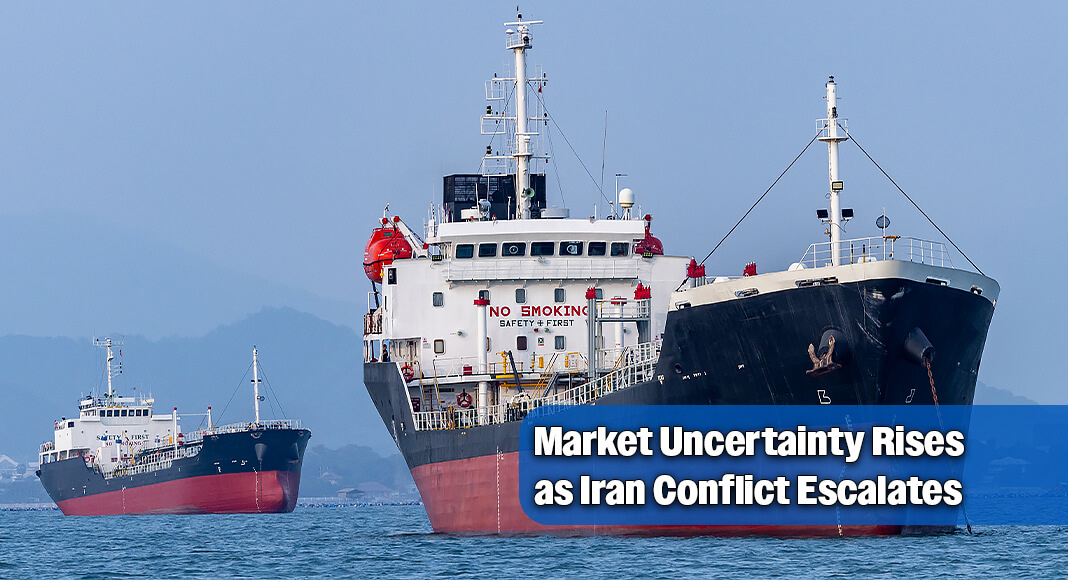
The biggest effect on energy markets is that traffic through the Strait of Hormuz has slowed dramatically due to its proximity to the attacks and the risks associated with the conflict. Most production from the Middle East – about 20% of the world’s oil supply – moves through this narrow shipping lane, and thousands of vessels are waiting in Persian Gulf ports for the threat to lessen.

Oil prices have risen significantly, up from below $60 per barrel early this year to about $76 (at least as I’m writing this; prices will fluctuate with each day’s headlines). While a notable jump, that’s still well below prices in the recent past such as above $90 per barrel in fall 2023 or over $120 per barrel during the summer of 2022.
From a practical perspective for consumers, effects will be somewhat mitigated for a while due to the fact that companies hedged and made purchases of crude ahead in anticipation of the hostilities. Nonetheless, there has already been some upward movement of gasoline prices and pressure will intensify if the situation persists.
The longer the conflict goes on, the more challenging it will be for energy markets. Not only is production capacity in the Middle East being disrupted, but there is also no way to get products to market until the Strait is secured. If the major disruptions ebb in a short period of time, the market will rapidly readjust. The longer they persist, the greater the long-term implications. Higher prices, even temporarily, will bring benefits to domestic producers.
This situation is constantly evolving, and it’s impossible at this moment to gauge the ultimate effects. Stay tuned – and stay safe!

___________________________
Dr. M. Ray Perryman is President and Chief Executive Officer of The Perryman Group (www.perrymangroup.com), which has served the needs of over 3,000 clients over the past four decades.