






Texas Border Business

Texas Border Business
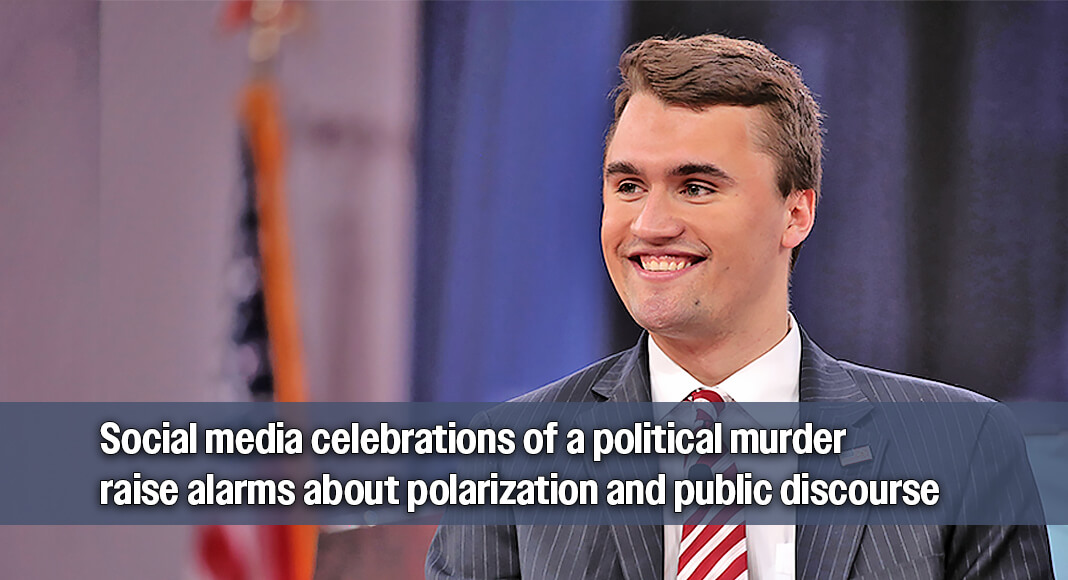
The killing of conservative activist Charlie Kirk at Utah Valley University has ignited both mourning and outrage — and, disturbingly, a wave of celebratory posts across social media. The polarized reaction has sparked warnings about how political violence is increasingly treated as entertainment in digital spaces.
Within hours of the shooting, platforms like X and TikTok were flooded with memes and comments applauding the assassination. Reuters reported examples such as “he got what he deserved,” while others condemned the mockery, stressing that disagreement should never justify bloodshed. The backlash was swift: the Washington Post documented dozens of employees suspended or fired for posting celebratory remarks, and the Pentagon said it would discipline service members who did the same. Bluesky, a rising social platform, told users that cheering Kirk’s death violated its rules.

Polls suggest Americans see a broader problem. A Reuters/Ipsos survey found that 63 percent of respondents believe inflammatory political speech contributes heavily to violence, and two-thirds worry about attacks in their own communities. Nearly eight in ten said Americans are less tolerant of opposing opinions than in the past.
Leaders from both parties sought to shape the message. Pennsylvania Governor Josh Shapiro called for “universal condemnation of violence,” while Senator Ted Cruz emphasized free speech protections but said employers had grounds to act against celebratory posts. Vice President JD Vance encouraged supporters to report individuals mocking the death, a move critics said risked harassment.
Experts say the online response reflects how polarization and platform design interact. Studies from Brookings and the Carnegie Endowment show that algorithms amplify outrage, pushing people into echo chambers where opponents are cast as enemies. In that environment, celebrating a killing can feel like another form of partisan signaling rather than a moral line crossed. Misinformation compounded the problem: early rumors misidentified suspects and spread unverified claims, deepening suspicion across ideological lines.
Civil society groups warn that such dynamics normalize violence as part of political debate. Far-right activists circulated screenshots of teachers joking about the shooting, leading to disciplinary action in several school districts. Advocates argue that while accountability matters, mass doxxing campaigns blur into intimidation.

The Kirk case also echoes history, when assassinations of figures like Martin Luther King Jr. or Yitzhak Rabin were intended to halt influential ideas rather than weak ones. Analysts caution that viewing violence as a political shortcut erodes democracy itself. “Violence is not politics,” one local faith leader told reporters. “The moment we accept that, democracy is at risk.”
For many Americans, the episode highlights how digital spaces amplify extremes while ordinary voices — such as neighbors who want stability and safety — are drowned out. Whether the aftermath leads to deeper division or a renewed call for restraint may depend less on platforms or politicians than on the willingness of citizens themselves to resist the pull of outrage.
See related stories: