





Texas Border Business

By Roberto Hugo González
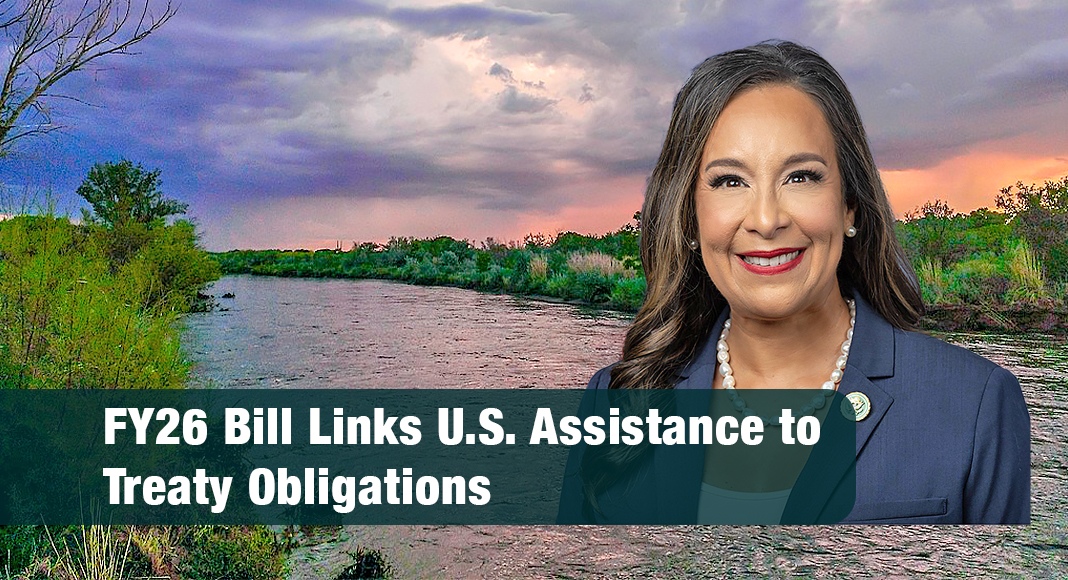
Congresswoman Monica De La Cruz (TX-15) announced that language she requested to condition U.S. assistance to Mexico on compliance with the 1944 Water Treaty has been included in the Fiscal Year 2026 National Security, Department of State, and Related Programs Appropriations legislation. The provision would block American taxpayer funds from going to the Mexican government until the Secretary of State certifies that Mexico has met its agreed-upon water deliveries to the United States under the treaty.
De La Cruz emphasized that for decades, Mexico has failed to meet its water delivery commitments without facing repercussions. By adding this provision to the appropriations bill, she said the United States is taking a step toward ensuring accountability and compliance with the long-standing binational agreement. The measure stems from a letter she sent earlier this year to House Appropriations Committee member and National Security, Department of State, and Related Programs Subcommittee Chairman Mario Diaz-Balart, urging inclusion of the language.

The 1944 Water Treaty outlines water-sharing agreements between the United States and Mexico for the Rio Grande and Colorado River basins. Under the treaty, Mexico is obligated to deliver a set quantity of water to the United States every five years, but disputes and delays in delivery have been recurring issues.
The United States has provided Mexico with more than $3 billion in assistance since 2008, primarily aimed at combating organized crime, strengthening judicial institutions, and enhancing border security. From 2008 to 2021, much of this aid was delivered under the Mérida Initiative, a security cooperation framework focused on countering drug cartels and transnational criminal organizations. The program provided equipment, training, and judicial support, with approximately $1.6 billion spent by March 2017.
Since late 2021, U.S. assistance has been structured under the Bicentennial Framework, which expands cooperation beyond security to include public health, community resilience, and broader governance reforms. Between fiscal years 2014 and 2018 alone, the State Department and USAID allocated more than $700 million for programs related to criminal justice, border management, and institutional capacity-building in Mexico.
Supporters of U.S. foreign assistance to Mexico argue that it addresses shared security threats, strengthens the rule of law, and enhances regional stability, while also helping to protect U.S. communities from the impacts of drug trafficking and organized crime. By tying this assistance to water treaty compliance, the FY26 provision represents a shift in how the United States may leverage its funding to address longstanding bilateral disputes.

See letter below: