






Texas Border Business

By Roberto Hugo González / Texas Border Business
McALLEN, Texas – One of the central objectives presented at the December 3 meeting was the development of a public, comprehensive digital database detailing all academic programs, research capabilities, and training offerings across Rio South Texas and Northern Tamaulipas. COSTEP, Council for South Texas Economic Progress CEO Adam Gonzalez, said this tool is intended to address a persistent challenge in regional economic development: the lack of consolidated information on higher education assets.

Gonzalez explained, “It is really for the region, for all of us to use… so that other EDCs, other governments, other universities can use it, and especially those looking to invest in our region, they can find the right partner, the right educational system that they need for their manufacturing operation.” He emphasized that the database would also be a global resource. “It’s not just to be shared with the region, but it’s really to be shared with the world,” he said. “We really want site selectors, companies looking to expand, to look at this data and help them be attracted to our region.”

According to Gonzalez, companies frequently contact regional promoters seeking detailed information on academic programs and training capacity. Without a unified inventory, organizations struggle to answer these questions quickly and accurately. The proposed database will address this gap and help position the region as a competitive location for investment.
The meeting included a review of a draft questionnaire that colleges and universities will complete to populate the database. The audience, which included deans, vice presidents, and directors from multiple institutions, offered specific recommendations to ensure the tool captures relevant information. One significant suggestion was to include a section for customizable training that institutions could deliver directly to industry.
Gonzalez described the database as part of a bigger strategy to align educational offerings with industry needs. A parallel project is currently inventorying all manufacturing operations in both South Texas and Northern Tamaulipas. He noted that preliminary data identified 301 manufacturing companies on the Mexico side and 52 on the US side, demonstrating the binational nature of the regional talent pipeline.
The goal is for academic institutions to use the combined insights from both inventories to identify gaps, update programs, and prepare for future jobs. Gonzalez explained that the initiative should help the region shift from reacting to urgent workforce shortages to planning proactively for emerging industries. “We need to not only align the educational system, the business attraction and economic development system, but we need to adapt the philanthropy system,” he said, referencing the need for funding to support new programs and training.

COSTEP, the Council for South Texas Economic Progress database, will be free, searchable, and accessible to companies, governments, and educators worldwide. By consolidating academic information, the initiative aims to promote the region’s strengths, improve business attraction efforts, and elevate the reputation of the entire binational region.
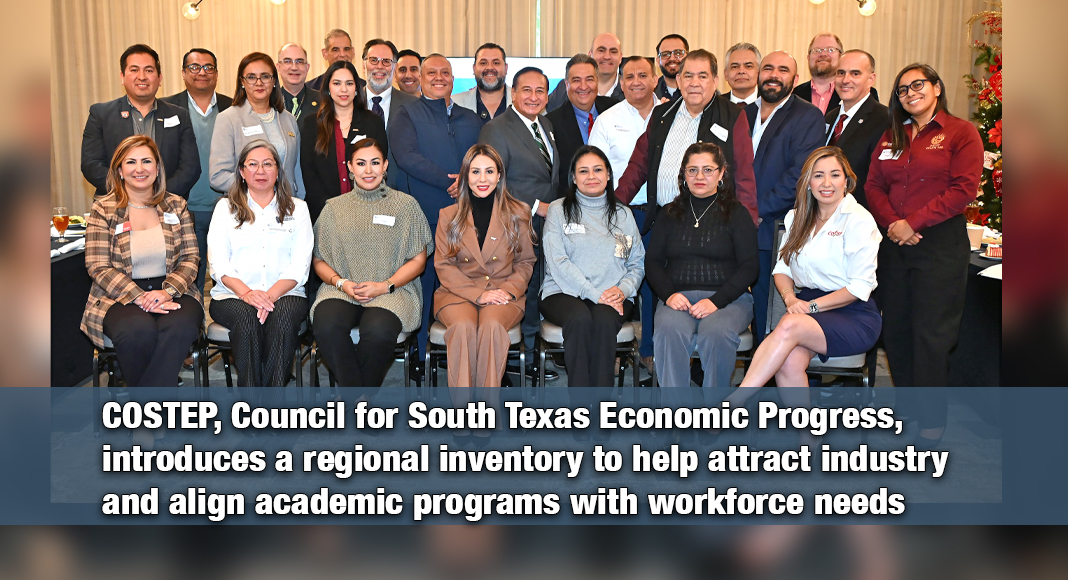
Part 2 of 3: The article was written based on the meeting of the Binational Higher Education Advisory Council, which aims to strengthen educational collaboration between Northern Tamaulipas and the Rio South Texas Region.
See related story: