







Texas Border Business

By Roberto Hugo González / Texas Border Business
The Binational Higher Education Advisory Council Meeting provided an opportunity for higher education leaders from Rio South Texas and Northern Tamaulipas to offer expert feedback on the creation of a binational academic database and to discuss the workforce trends affecting the region. The discussion revealed shared priorities, emerging challenges, and a strong commitment to cross-border collaboration.
As the CEO of COSTEP, Council for South Texas Economic Progress, Adam Gonzalez guided attendees through the draft academic inventory questionnaire, shifting the atmosphere from a formal presentation to a working session. Leaders asked detailed questions about program categories, data accuracy, and future uses of the information. A question about whether a parallel database of industry needs was underway allowed Gonzalez to confirm that such an inventory was nearly complete and would serve as a companion tool.

Several themes emerged repeatedly. One was the need to strengthen alignment between education and industry. Attendees discussed the importance of understanding not only current workforce shortages but also the long-term skills required for advanced manufacturing and new technologies. Another recurring theme was regionalism. Gonzalez emphasized that promoting the region as a whole is essential, noting that its interconnected economies share benefits and challenges.
The meeting also highlighted emerging trends. Leaders pointed to the growing demand for “customizable training” delivered on-site at company facilities. This approach would allow institutions to respond quickly to employer needs without waiting for full degree programs to be developed. Participants also discussed the shift from reactive responses to workforce shortages toward proactive planning. This aligns with Gonzalez’s statement that the initiative should serve “not only to inventory what exists, but to guide the future development of academic programs needed to attract new industries.”
The exchange of ideas was steady and constructive. Suggestions were immediately incorporated into the planning process, reinforcing the collaborative tone of the meeting. The final round of introductions allowed participants to describe their roles, which ranged from academic affairs to research, institutional planning, workforce development, and external relations.
The potential impact of the initiative was also discussed. The binational database, combined with the manufacturing inventory, is expected to support industry recruitment, improve educational pathways, and strengthen long-term economic competitiveness. The meeting underscored the need to address practical questions as well, such as how the data will be updated, how companies will connect to institutions through the platform, and how differences in standards and regulations between the US and Mexico will be managed.
By the end of the session, participants agreed that the initiative represents an important opportunity to shape a shared talent ecosystem. The meeting closed with a shared understanding that sustained cooperation, regular data exchange, and strategic planning will be necessary to support economic growth on both sides of the border.
Part 3 of 3: The article was written based on the meeting of the Binational Higher Education Advisory Council, which aims to strengthen educational collaboration between Northern Tamaulipas and the Rio South Texas Region.
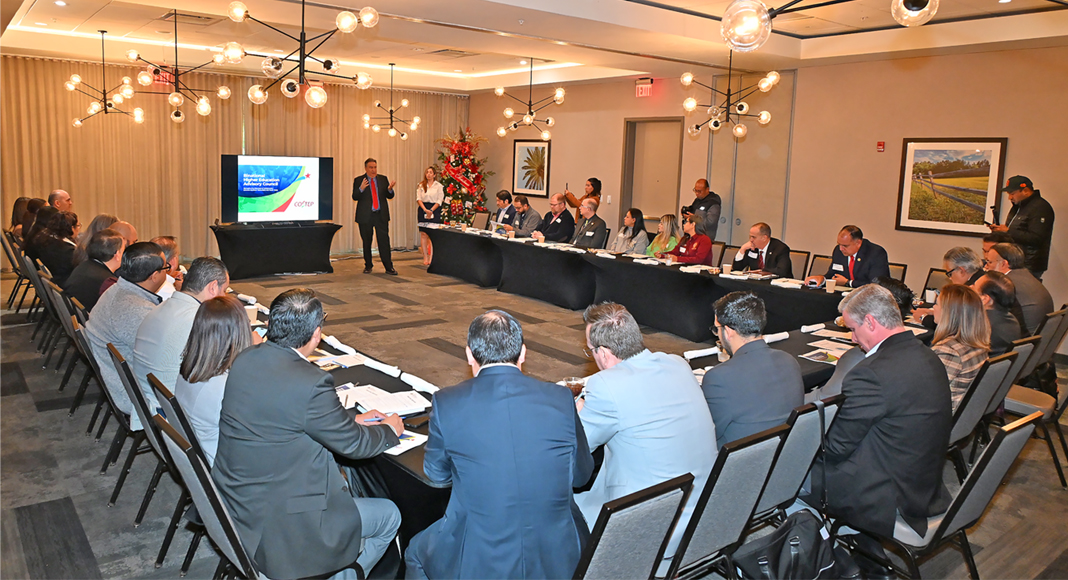
Adam Gonzalez, CEO of the Council for South Texas Economic Progress (COSTEP), leads a full-room discussion at the Cambria Hotel as more than 30 higher education and workforce leaders from Rio South Texas and Northern Tamaulipas convene for the Binational Higher Education Advisory Council Meeting—the largest gathering of educational leadership to date in the Rio South Texas region. Photo by Roberto Hugo González / Texas Border Business.
See related stores: