







Texas Border Business

Texas Border Business
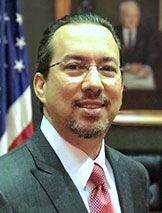
Cameron County is conducting due diligence on the data center industry as interest in locating such facilities in the area increases, according to County Judge Eddie Treviño, Jr., who is providing the information on behalf of the county. Officials say the process is focused on understanding both the potential benefits and the challenges that data centers can bring to local communities.
“As interest in building a data center in Cameron County grows, it is important to acknowledge and respect the legitimate concerns raised by our community,” Treviño said. He emphasized that county leaders are not looking only at economic opportunity, but also at long-term impacts. “While we must examine the potential economic benefits such a development may bring, we must evaluate possible challenges, particularly those related to natural resource usage, including land and water, and energy consumption.”

County officials are currently reviewing studies and researching how data centers have been developed in other regions. The goal, Treviño said, is to understand “the impacts they have had on local communities” before any decisions are made. He added that this research is part of a broader effort to ensure responsible planning and sustainability.
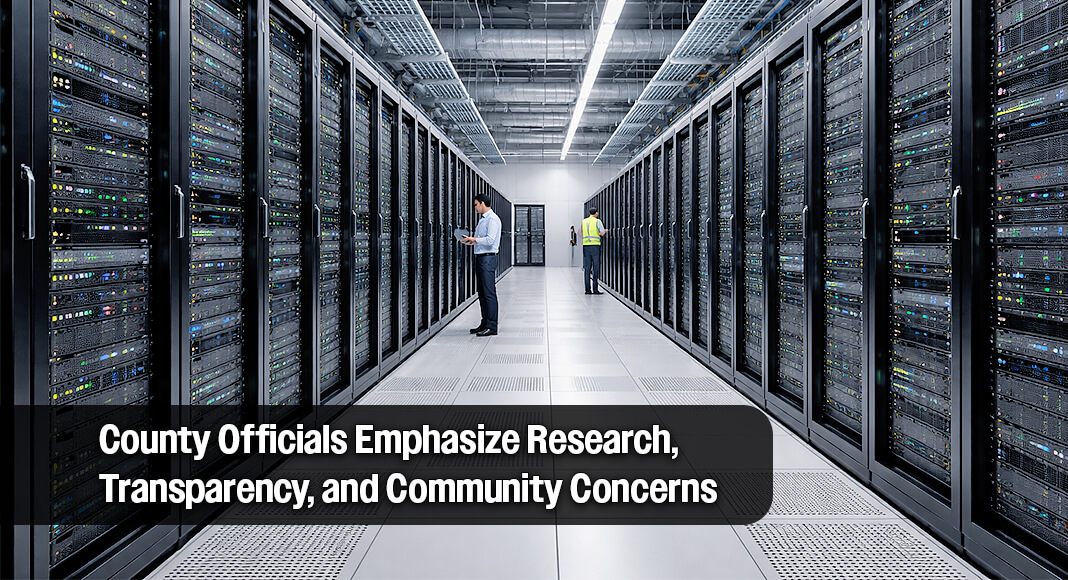
As part of its research, Texas Border Business notes that a data center is a large, secure facility that houses powerful computer servers used to store, process, and manage digital information that supports services such as cloud computing, online banking, streaming, and communications, and that these facilities require substantial electricity, cooling systems, water resources, and secure infrastructure to operate around the clock. While data centers can bring significant capital investment and tax base growth, they typically do not employ a large permanent workforce once operational, relying instead on a relatively small number of highly skilled technicians, security staff, and maintenance personnel. The largest employment impact occurs during the construction phase. This context is part of the due diligence Cameron County is conducting as interest in data centers grows, alongside county leadership’s stated focus on understanding long-term impacts to natural resources, energy use, and sustainability before any formal proposals are considered.
Cameron County continues to communicate with business prospects across many industries, including data centers. However, Treviño noted that the county’s authority is limited. “The County’s authority to restrict businesses located within the county is limited,” he said. He explained that when a business complies with all applicable standards, permitting requirements, and resource arrangements that are outside the Cameron County Commissioners Court’s authority, “we have limited ability to restrict that business’s operations.”
At this point, Treviño stressed that no formal proposal has been submitted. “At this time, the County has not received a formal business proposal or permitting applications for the construction of a data center,” he said. The current work, he added, is strictly preparatory.

“This due diligence is essential,” Treviño said, “to ensure that Cameron County remains a leader in economic development while ensuring sustainability for our future.”