






Texas Border Business

By Roberto Hugo González
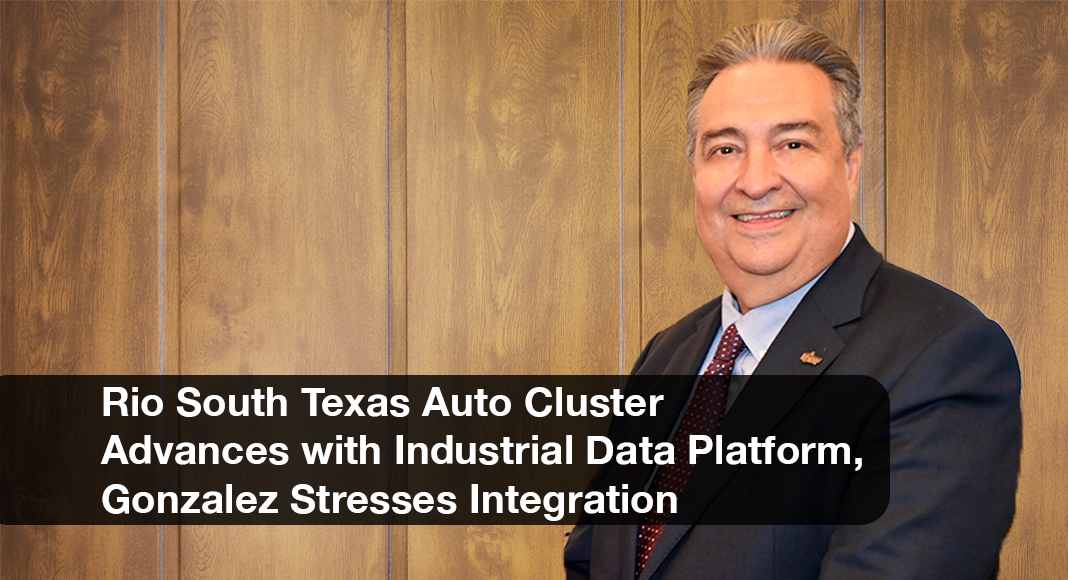
On August 13, 2025, in Laredo, Texas, Adam Gonzalez, CEO of the Council for South Texas Economic Progress (COSTEP), delivered a second presentation focused on “Rio South Texas Binational Auto Cluster – Next Steps Industrial Data System.” The meeting introduced the Rio South Texas Region Binational Auto Cluster and its first initiative, the Rio South Texas Region Industrial Data System. This platform is designed to centralize strategic information about manufacturing companies in Northern Tamaulipas and South Texas, enabling the mapping of industrial sectors, identifying regional capabilities, and generating reliable data for investors.
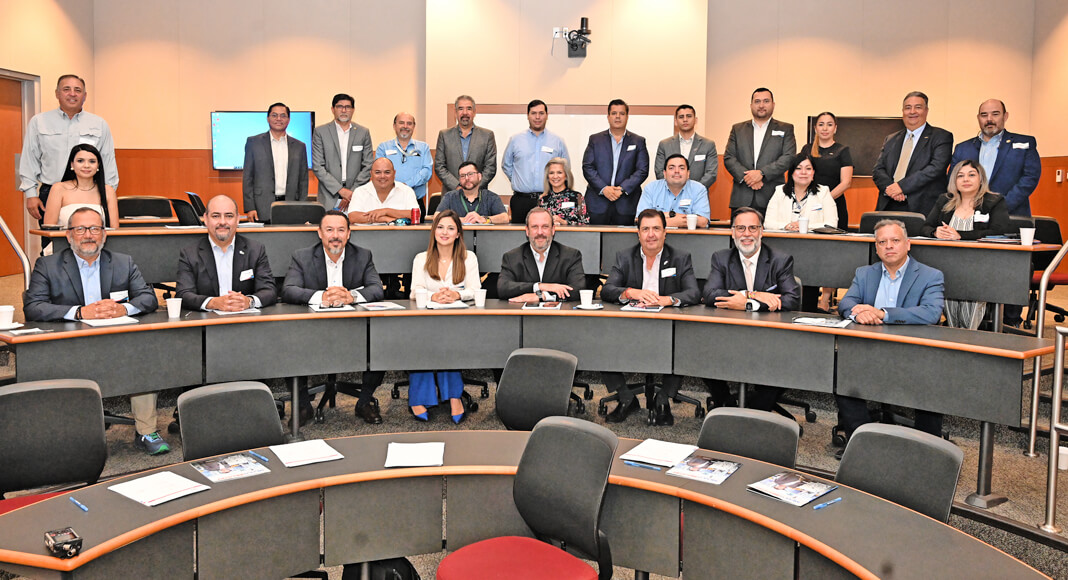
The gathering brought together leaders from Laredo, Nuevo Laredo, academia, and business organizations. Opening the discussion, one participant said, “I think we’ve all been trying for years to achieve something like this, and it’s great that now it’s being done… Nuevo Laredo could be an easy pilot because we have 34 maquiladoras. The challenge is to get those 34 to participate, and then for the whole region to join.”

In his remarks, Gonzalez stressed that the initiative is part of a broader strategy for integration. “What we want to do is ensure every manufacturing operation—whether it’s aerospace, medical devices, or auto—gets collected at one time and kept updated simultaneously, because we’re going to promote everything,” he explained. He emphasized that the goal is to build a platform serving multiple industries across the border.
The discussion also covered broader economic and geopolitical challenges. “This is really an invitation to reimagine North America,” said another speaker. He outlined two possible paths: “Path A, fragmentation; or Path B, what we call NAFTA/USMCA 2.0. For those of us exploring and suggesting ways to deepen integration, 2.0 is the right route… The question is: will we be the architects of the future, or victims of change?”
Statistical data highlighted the region’s significance. According to the presentation, North America accounts for 30 percent of the world’s GDP, with $1.6 trillion in yearly trade and 501 million consumers. “That equals $3.1 million in commercial exchange per minute,” the speaker explained, adding that three decades of integration “have generated over 17 million jobs and $1.6 trillion in trade.”
Market realities also shape trade balances. With a $29 trillion GDP and an $85,000 per capita income, the U.S. economy significantly surpasses Mexico’s $1.8 trillion economy and $14,000 per capita income. “One U.S. consumer equals six Mexican consumers in purchasing power. Tariffs don’t change that. More integration is needed, not isolation,” the analysis concluded.

Studies from the Texas Center estimate that 4.1 million jobs in Mexico and 4.3 million in the United States are directly linked to North American trade. A 25 percent reduction in trade could put roughly one million jobs at risk in each country. States most exposed include Texas, Michigan, Jalisco, Estado de México, Baja California, Nuevo León, and Chihuahua.
The proposal advocates for a trilateral framework focused on enhanced security cooperation, coordinated industrial policy, and technological advancements. As Gonzalez stated, the platform and broader cluster strategy represent “a key step toward strengthening economic and logistical integration” across the border.
The event was hosted by the A.R. Sánchez, Jr. School of Business at Texas A&M International University in Laredo.