








Texas Border Business

By Roberto Hugo González / Texas Border Business
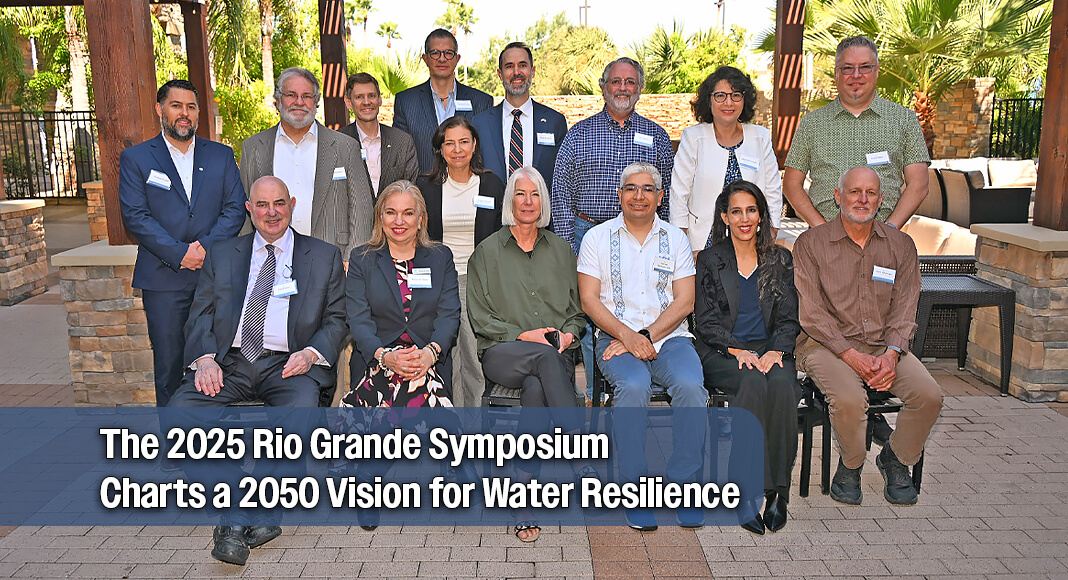
McALLEN, Texas — Facing unprecedented challenges of drought, growing water demand, and aging infrastructure, water leaders from across the United States and Mexico convened in McAllen this week for the 2025 Rio Grande/Río Bravo Binational River Symposium. The three-day event, hosted by the Texas Water Foundation, aimed to “chart a shared 2050 vision for the river,” according to organizers, while strengthening cross-border collaboration.
“The Rio Grande is under extraordinary pressure,” said Texas Water Foundation CEO Sarah Schlessinger in her opening remarks. “Drought, rising demand, aging infrastructure, salt and sediment challenges—these are no longer distant threats. They are our shared reality.”

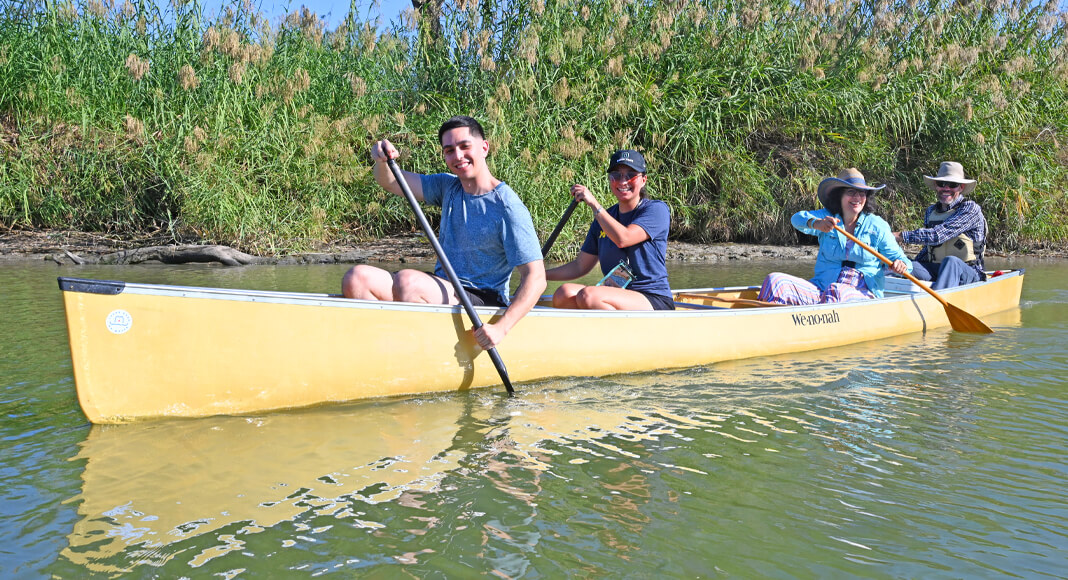
Held from November 5 to 7, the Symposium drew more than 200 participants, including representatives from state and federal agencies, universities, irrigation districts, NGOs, and the private sector. The event opened with a field excursion—a river paddle at Anzalduas Park in Mission, Texas, where more than 20 binational leaders explored the river firsthand and participated in a fish survey.
On Thursday, the North American Development Bank (NADBank) announced new funding for infrastructure projects in the Rio Grande Basin during a panel discussion. The announcement highlighted the critical role of investment in addressing what many described as a growing water security crisis.
The Symposium’s theme, “The River in 2050,” invited participants to look beyond current policies and treaties to imagine what a sustainable future might look like. Schlessinger encouraged attendees to engage deeply with the question: “What do you believe the river could be in 2050?”
Reflecting on the Symposium’s origins, Schlessinger credited Dr. Maria-Elena Giner, former Commissioner of the U.S. Section of the International Boundary and Water Commission, for inspiring the event’s creation. “Almost four years ago, a dear friend of the Texas Water Foundation planted a seed of an idea,” she said. “She believed that the way for us to advance the future of the Rio Grande—the Río Bravo—was to build trust and collaboration.”
Schlessinger noted that the Symposium has grown through turbulent years marked by “two federal elections, two leadership turnovers, trade wars, droughts, and two government shutdowns.” She thanked participants for their persistence and commitment, adding, “It has been a wild ride, and thank you so much for leaning in and being here despite all of these things.”
The Symposium’s agenda included panels on binational water policy, financing, science, and the role of groundwater, as well as collaborative workshops designed to generate dialogue among participants. To promote open discussion, organizers applied the Chatham House Rule, meaning that comments would be recorded but not attributed to individuals or organizations.
To ensure the discussions translate into tangible outcomes, four rapporteurs were appointed to document key themes and ideas. Their work will inform an upcoming publication, The State of the Rio Grande: 2050, which the Texas Water Foundation plans to release next year.
The Symposium also incorporated moments of reflection about the human and ecological connections that define the basin. Schlessinger recounted a moment from a pre-event tour of the National Butterfly Center: “Our guide shared a poetic statement: ‘We coexist together; we need each other to survive.’” She added, “I think she was talking about the Butterfly Center, but I would offer this simple but powerful reminder to us as we open our symposium.”
Over its three years of evolution, the Binational River Symposium has become a key forum for cross-border dialogue on water security and sustainability. By focusing on science-based trust-building and long-term visioning, organizers hope the event can influence future policies and investments in the basin.
“The river doesn’t recognize borders,” Schlessinger said. “Our collaboration must be just as seamless.”
As the Symposium concludes on Friday at noon, participants will leave McAllen with a renewed commitment to cooperation and understanding that the future of the Rio Grande/Río Bravo depends on what leaders do today.
See related stories: